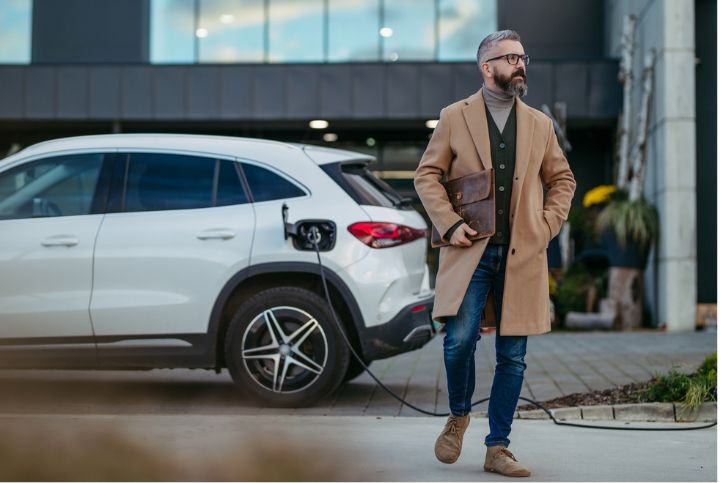


Electric vehicles have become the dominant powertrain within the UK’s largest corporate car fleets, highlighting the pace at which fleet electrification has accelerated over the past four years.
Fleet200 research shows diesel, once the mainstay of company car fleets, has fallen from more than two-thirds of vehicles in 2021 to under 16% in 2025. Petrol has remained broadly stable, while the most significant growth has come from plugged-in electric vehicles.
Electric and plug-in hybrid cars now account for almost two-thirds of Fleet200 car fleets, compared with less than 9% in 2021. This growth has been driven by favourable tax breaks, corporate net zero commitments and the rapid expansion of electric vehicle choice. Fleet operators are adopting EVs faster than the wider new car market, where fully electric vehicles represent just over a fifth of registrations.
Despite the overall trend, progress varies significantly between organisations. A small number of fleets are already fully electric, while others have yet to introduce battery electric vehicles at all. Most sit somewhere in between, reflecting differences in operational requirements, driver acceptance and infrastructure.
Vodafone UK, for example, expects its company car fleet fully electric by 2026. A structured transition programme, removal of petrol and diesel options and strong employee engagement have enabled it to move ahead of industry averages.
The shift to electrification has delivered substantial carbon reductions. Average fleet CO2 emissions have more than halved since 2021 and are set to fall further based on vehicles currently on order. However, challenges remain. Certain job-critical fleets, such as emergency services, still face limitations around range, charging speed and performance.
Helping fleets with the intricacies of transitioning to electric cars, Motor Assist supports both internal combustion engine (ICE) and EV drivers with comprehensive incident management solutions, including like-for-like fully electric replacement cars. Its network of specialist bodyshops is equipped to handle all powertrain types, with 99% of sites now able to handle EVs as well as ICE cars.