

The UK Government published its Autumn Budget for 2026 last week, which delivered several policy changes which impact the automotive sector.
The 5 pence per litre fuel duty rise has been further delayed until July 2027, along with the planned inflationary increase. Originally due to be enforced this autumn, the increase had already been delayed in the government’s Spring budget, due to ongoing fuel cost rises.
With the average cost of diesel exceeding £2 per litre for the first time in October, the delay is expected to help offset financial strain for drivers. The increase will now take effect from 1st July 2027, with rates increasing by 5p per litre and it will grow in line with the Retail Prices Index (RPI).
The government also announced measures it will be taking to help with the introduction of the Electric Vehicle Excise Duty (eVED), the new mileage-based charge for electric and plug-in hybrid cars. These will include:
- A mileage estimation tool to support drivers when it comes to estimating their mileage
- An opt-in system, “eVED Connect”, that utilises built-in connectivity in cars to save drivers from manually reporting their mileage estimations
- An automated refunds model, to be introduced by 2030, which will make refunds easier and available in more circumstances, such as when a motorist overestimates their mileage or sells their car
For businesses, the benefit-in-kind (BiK) tax rate was published through to 2030/31. For electric company cars, the BiK rate will rise from 4% to 5% in 2028/29, and PHEVs emitting 1-50g/km will see a rise to 18% in 2028/29. From 2029/30 to 2030/31, all company-car BiK rates will increase by one percentage point up to a maximum of 40%. This means that a 40% taxpayer will pay £1,400 less company car tax a year for an EV than a PHEV.
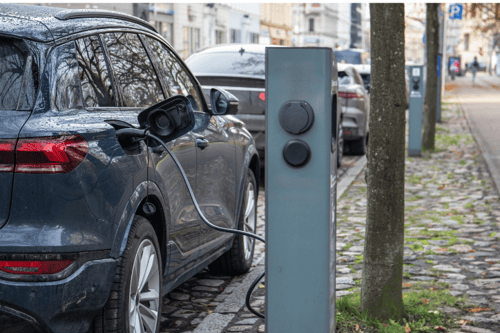
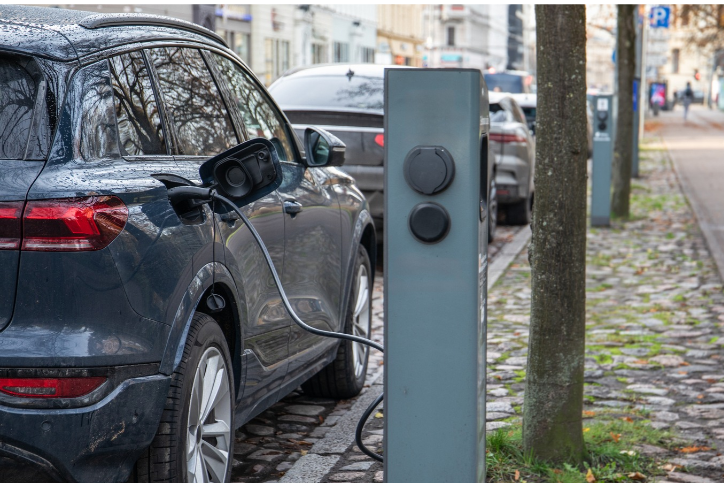
In terms of battery charging updates, the Government announced multiple policies in the Budget. The 0% VAT on domestic electricity has been extended until July 2027, which is welcomed by motorists who charge their cars at home.
VAT on public chargers across the UK is set to remain at 20%, despite pushback. However, the Government also provided plans to supply over £100 million over two years to help reduce costs at local, lower-powered public chargers from next spring. The rollout of this is yet to be announced, but the government claims that the measure will save the average EV driver that uses on-street charging around £150 per year.
The continuation of the fuel duty freeze and 0% VAT for domestic energy rates will be welcome updates for both ICE and EV drivers. Motor Assist can provide assistance for drivers of any powertrain in the event of an incident, with expert bodyshops that can cater to each vehicle type and like-for-like replacement vehicles available when needed, including EVs.
For those considering the transition to electric, EValuate, the latest initiative by Motor Assist, provides ICE drivers in need of a replacement vehicle to select an EV for a real-world extended test drive.
Our unique electric vehicle test drive initiative helps to boost demand for EVs.
It gives petrol, diesel and hybrid car drivers the opportunity to experience what the electrification transition is like.